


Prerequisites:
Proof of payment of A3 Pro Course Student Fee required.
Student Requirements for Enrollment (1 – 3 all required):
1) Course applicants have completed the following A3-recognized courses prior to enrollment:
a) Pro 1 Certificate
b) Alternatively, applicants who believe they have the educational equivalent of the above-listed prerequisite can apply to the Pro Course Provider of their choice for a Prior Learning Assessment (PLA) review. Course enrollment in these situations is at the discretion of the Pro Course Provider.
2) Work Experience
a) A minimum of 40 days of operational avalanche experience over two winter seasons, and
b) Letter of recommendation from a supervisor (A3 Pro Member recommended) verifying:
- 40 days minimum work experience over two operating seasons (note, this can be in the same year if the worker has worked in both the northern and southern hemispheres). This includes participation as a team member, attending daily ops meetings, and participation in operational activities that requires avalanche risk management.
- Avalanche rescue (companion) practices with team leader responsibility. The applicant has participated in multi-team organized avalanche rescue exercise(s).
- The applicant is able to complete the tasks required of a route leader or ski guide or avalanche forecaster.
3) Submit examples of the following professional documentation: two profiles, two operational meeting forms, two pages from two days of field observations
*Prerequisites will be assessed after payment is made. If you do not meet the prerequisites you will be refunded the cost of the course minus a 10% assessment fee.
Overview:

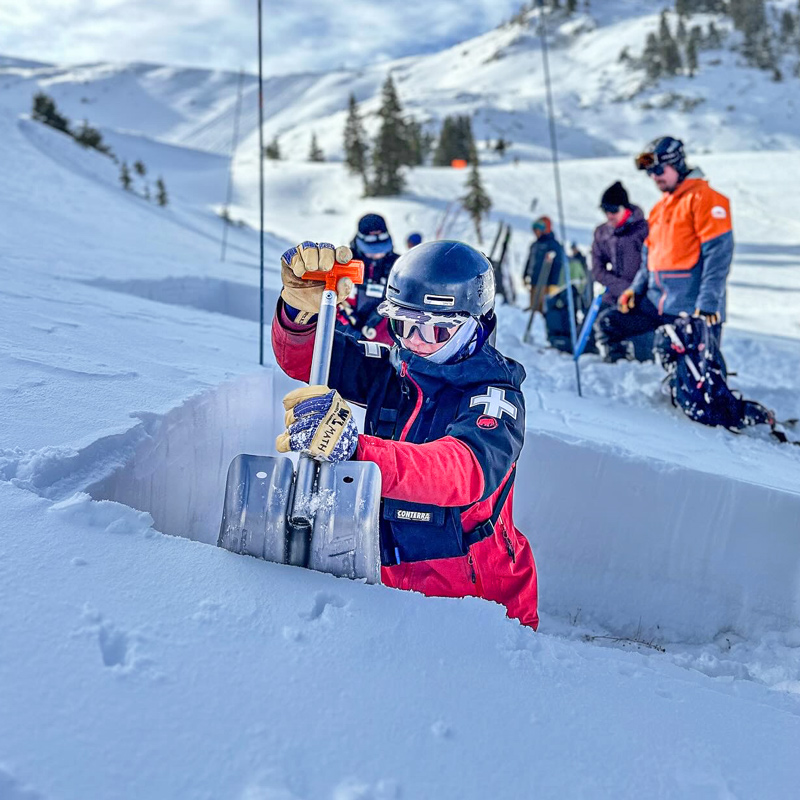
This course is the highest level of formal avalanche training in the U.S.. The course is designed for avalanche workers moving into leadership roles within their operations or for experienced workers who desire to continue to develop their risk management leadership skills. The course progresses beyond hazard analysis and moves into avalanche forecasting for different avalanche problems, snow climates and operations. The course will advance the skills for both mitigation-based and avoidance-based avalanche professionals. The tools taught and practiced will apply equally well for ski patrollers, guides, outdoor educators, public avalanche forecasters, and highway program personnel. The course will also address the distinctions between “mitigators” and guides and add tools for both sets to use. Approximately half of the course is classroom based and half is field based. We will travel in the backcountry, in and around avalanche terrain.
*This is a pass/fail course
Have questions on the pro/rec split? See our pro/rec frequently asked questions page for more details, including a visual of the course progression.
All Upcoming Dates and Locations:
- January 5, 2026 - January 10, 2026 - Professional Avalanche Training 2 - Jackson, Wyoming
- January 12, 2026 - January 17, 2026 - Professional Avalanche Training 2 - Frisco, Colorado
- February 2, 2026 - February 7, 2026 - Professional Avalanche Training 2 - Salt Lake City, Utah
- February 23, 2026 - February 28, 2026 - Professional Avalanche Training 2 - Alta, Utah
This course focuses on the following knowledge and skill sets:
- Improved understanding of snowpack formation & metamorphism
- An overview of current understanding of avalanche release (related back to what practitioners can readily observe in the field)
- Understanding, and accounting for, spatial variability
- Strengths and limitations of stability tests
- Professional standard of recording data and record keeping.
- Creating personal/professional forecasts and nowcasts based on available information
- Making operational decisions based upon avalanche hazard analysis
- Recognizing trends and patterns in stability
- Efficient & accurate route-finding and group management in complex terrain
- Human factors that influence decision-making as professionals and recreationists
- Technical report writing
Sample Itinerary:
Day 1: Intro Evening Zoom Meeting; 6pm – 8pm
- 6:00 – Course Intro, Goals, Expectations, Course Logistics for tomorrow and beyond, Q&A, weather stations, weather and avalanche forecasts, season history – current problems/state of the snow pack, significant events, and review of AM form
- 8:00 – End of Day
Day 2: Field Day; 7:30am – 5:30pm | Field Obs and Troubleshooting
- 7:30 – Meet @ trailhead, Morning Avalanche Hazard Assessment, Shakedown tour with appropriate snow obs, Ongoing snow, weather and avalanche observations
- 2:00 – Meet at Classroom, Share concise obs and fill in collective PM form, Mechanics Review, Q&A, Review Ops ex specifics
- 5:30 – End of Day
Homework – Complete PM form and start AM form
Day 3: Field Day; 7:30am – 5pm | Operations Exercise and Avalanche Atlas
- 7:30 – Meet @ trailhead, Morning Hazard Assessment (Student-Led), Tour to Ops ex location, ongoing snowpack and terrain obs
Collect Data and pictures for ops ex - 3:30 – Return to trailhead, Share concise obs, Q&A, Day 3 logistics
- 5:00 – End of Day
Homework – PM Form, Prep for AM Form, Ops Exercise/Avalanche Atlas, Tour plan for tomorrow, Submit: Field book photos (snow obs and observation rose)
Day 4: Field Day; 7:30am – 4:00pm | Public/Operational Forecasting
- 7:30 – Meet @ trailhead, Morning Hazard Assessment, Ops ex Q&A, Multi-Aspect and Multi-elevation tour, Review obs,
2:00 – Return to trailhead, Share concise obs between field groups, Using CMAH to discern avalanche hazard discussion, Discussion about crafting a well-crafted bottom line, Q&A from Day, Logistics for tomorrow - 4:00 – End of Day
Homework: Complete PM Form, Tour Plan, Finish Ops Exercise, Submit: PM Form, Ops Exercise
Day 5: Field Day; 7:30am – 12:30pm | Forecasting Continued
- 7:30 – Meet @ trailhead, AM Hazard Assessment, Morning tour, Share concise obs between field groups
- 12:30 End of Day
Homework: Finish Technical Report, Craft bottom line statement/operational summary, 3 Questions, Submit: Bottom line/operational summary, Any missing documents
Day 6: Field Day; 7:30am – 5:00pm | Organized Rescue – Moving Groups Through Avalanche Terrain
- 8:00 – Meet at Classroom, AM Hazard assessment, Q&A, logistics, Risk Management class and Legal Case Study Review, Storm Profile Exercise, Introduction to SAR Response scenario
1:00 – Meet at trailhead, SAR Call out, Student-planned travel to location and facilitate rescue/recovery, Complete accident investigation, Photos, Avalanche info, Snow Analysis
5:00 – End of Day
Homework: Complete accident short form and submit
Day 7: Field Day; 7:30am – 3:00pm | Technical Reports and Final Exam
- 8:00 – Meet at Classroom, Oral presentations, Stump the Chumps, Q&A, Course Debrief
- 1:00 – Final Exam link shared
- 3:00 – Final Exam submitted, Course Close
Preparation:
Recommended Reading:
- Staying Alive in Avalanche Terrain, Bruce Tremper
- Snow, Weather and Avalanches: Observational Guidelines for Avalanche Programs in the United States (SWAG)
- The Snowy Torrents (A3)
- The Avalanche Review (A3)
Duration:
Evening Zoom + 6 Field Days
Maximum Ratio:
5:1
Minimum Age:
18
| Course Location | Alta, UT, Arapahoe Basin Ski Area, CO, Bellingham, WA, Frisco, CO, Girdwood, AK, Haines, AK, Jackson, WY, Salt Lake City, UT |
|---|
Pro 2 Course Price Includes:
- Professional instruction
- Course workbooks
- Online/classroom and field instruction
- 1-Year Base Subscription at OpenSnow
- 90-Day Pro Trial at Caltopo
- This avalanche course is eligible for College Credit.
Pro 2 Course Price Excludes:
- A3 Pro Course Student Fee
- Transportation to and from the trailhead
- Personal gear
- Avalanche rescue gear
- Food
- Lodging
- Clothing, backpack and personal items
- Skiing / Splitboarding Equipment
- Rescue Insurance / Fees
- Trip Insurance
- Expenses due to unforeseen circumstances beyond the control of American Avalanche Institute
| Item | Description | Quantity | Example | Purchase At | Rent At | Equipment Type |
|---|---|---|---|---|---|---|
| Avalanche Beacon |
Modern, digital, three-antennae beacon with fresh batteries. |
1 |
Salt Lake: Wasatch Touring |
Equipment | ||
| Avalanche Probe |
Collapsable metal rod used to probe avalanche debris while attempting to strike a buried target. |
1 |
Salt Lake: Wasatch Touring |
Equipment | ||
| Avalanche Rescue Shovel |
Ski specific shovel used to dig pits and avalanche rescue. A metal blade is mandatory. |
1 |
Salt Lake: Wasatch Touring |
Equipment | ||
| Backpack: 30-40 liter |
Packs smaller than this tend not to be able to carry the necessary amount of equipment and clothing. |
1 |
Men: Mammut Nirvana 35 Women: Mammut Nirvana 35 Women |
Salt Lake: Wasatch Touring |
Equipment | |
| Baselayer Bottoms |
Synthetic or Merino Wool, Lightweight or mid-weight are recommended. |
1 | Clothing | |||
| Beanie or Fleece Hat |
Should cover the ears, nice if it fits under a helmet. Hats with fluff balls on top do not fit under helmets. |
1 | Clothing | |||
| Climbing Skins |
Nylon or mohair. Trimmed and adjusted to fit your skis or splitboard ahead of time. |
1 |
Salt Lake: Wasatch Touring |
Equipment | ||
| Compass |
Used for navigation and orientation. A compass with adjustable declination is preferrable. |
1 |
Online |
Optional | ||
| First Aid Kit |
Your guide will have an emergency First Aid Kit. You should bring a small kit including blister prevention and care products such as a role of athletic tape and Moleskin. Your kit should also contain a few Band-aids, some Tylenol and Ibuprofen. |
1 |
Salt Lake: Wasatch Touring |
Optional | ||
| Food |
Proper lunches that are prepared ahead of time are recommended (sandwich, burrito, leftover pizza, etc), along with an assortment of snack bars, gels, or trail mixes. Feeze-dried meals are acceptable on overnight trips, but not day trips. |
1 |
Salt Lake: Wasatch Touring |
Equipment | ||
| Goggles |
Protect your eyes and face from wind and sun burn. |
1 |
Salt Lake: Wasatch Touring |
Optional | ||
| Shell Pants |
These should be non-insulated pants with ankle cuffs wide enough to fit over your ski or ride boots. |
1 |
Women: Mammut Stoney HS Pant |
Clothing | ||
| Headlamp |
Load with fresh batteries. Critical for hiking before sunrise and great to have in the pack in case you are caught out after dark. |
1 |
Salt Lake: Wasatch Touring |
Equipment | ||
| Heavyweight Waterproof Glove |
This glove comes out when the winter going gets cold and wet or at higher altitudes. |
1 | Clothing | |||
| Hot Drinks |
Coffee, tea, hot cocoa are great for warming up when it’s cold outside. |
1 |
Salt Lake: Wasatch Touring |
Optional | ||
| Laptop |
Useful for classroom sessions, tour planning, etc. |
1 | Optional | |||
| Lightweight Baselayer Top |
Synthetic or Merino Wool; Worn against the skin and is considered a “wicking” layer that facilitates the movement of moisture away from the skin and through the layers. Hooded base layers add extra versatility. |
2 |
Men: Mammut Selun FL Sun Hoody |
Clothing | ||
| Lightweight Gloves |
Synthetic; Thin gloves used when hiking the early morning approach. Belay gloves can suffice if full-fingered. |
1 | Clothing | |||
| Lip Balm SPF 15 or higher. |
Non-SPF rated lip balms can actually increase your chances of getting burned. |
1 |
Salt Lake: Wasatch Touring |
Optional | ||
| Notebook and Mechanical Pencil |
Great for taking notes in the field. Pro 1 and Pro 2 courses will receive a specialized notebook – students do not need to supply their own. |
1 | Optional | |||
| Midweight Baselayer Top |
Synthetic or Merino Wool; Adds extra warmth and protection from the cold and wind without creating a moisture barrier as a jacket would. Having at least one base layer that is hooded adds versatility, protecting the neck and ears from cold winds. |
1 |
Men: Mammut Trift Half Zip Longsleeve |
Clothing | ||
| Midweight Softshell Glove |
This is the workhorse glove and is most often worn on warmer days when mountaineering. Softshell gloves are water-resistant and durable. They often have leather palms and fingers. |
1 | Clothing | |||
| Neck Gaiter |
“Buffs” are quite versatile in their uses. They can be used as light beanies, neck warmers, and can offer face protection from the cold wind or sun. |
1 | Clothing | |||
| Ski Helmet |
This item is recommended but not required. We will be skiing in the trees, and in snow conditions where rocks, stumps, and downed logs are present. |
1 | Optional | |||
| Ski or Snowboard Boots |
Footwear should be appropriate to mode of travel i.e. AT skis or splitboard boots. |
1 |
Salt Lake: Wasatch Touring |
Salt Lake: Wasatch Touring |
Equipment | |
| Ski or Trekking Poles |
Two poles, with powder baskets, are required for all skiers and splitboarders. It is ideal if poles are ski-specific. |
1 |
Salt Lake: Wasatch Touring |
Salt Lake: Wasatch Touring |
Equipment | |
| Ski Straps |
25″ Rubber or velcro straps to connect skis when attaching them to a pack. Also useful for a variety of in-the-field equipment repairs. |
2 |
Salt Lake: Wasatch Touring |
Optional | ||
| Skis or Splitboard |
Skis should have touring bindings; lightweight tech bindings are ideal. Splitboards are required for snowboarders. |
1 |
Skis: K2 Wayback 98 Men’s Skis; K2 Wayback 98 Women’s Skis Bindings: Marker Kingpin Mwerks 12 Bindings Splitboard: Weston Backcountry Splitboard Bindings: Spark/Karakoram x Weston |
Salt Lake: Wasatch Touring |
Equipment | |
| Slope Meter (Inclinometer) |
Used to measure slope angle, this tool is a standard equipment item for any backcountry traveler in avalanche terrain. |
1 |
Salt Lake: Wasatch Touring |
Optional | ||
| Smart Phone Apps |
There are a plethora of apps that assist in navigation. These apps use your phone’s GPS functions and can work in the mountains offline. Additionally, avalanche professionals can access standardized observation and recording guidelines (SWAG) using an app, or a downloaded PDF. |
1 |
Caltopo, GAIA GPS, SWAG (Snow Weather and Avalanche Guidelines, for professionals) |
Caltopo: App Store, Google Play Gaia GPS: App Store, Google Play |
Optional | |
| Smartphone |
Great for taking photos, videos, and notes in the field. Smartphone batteries tend to shut down in freezing temps – keep your phone in a warm inner layer. A tether can be nice in the mountains to protect against dropping your phone. |
1 | Optional | |||
| Snow Saw |
For cutting columns during snowpack analysis – Note that this is mandatory on Pro Courses. |
1 |
Salt Lake: Wasatch Touring |
Optional | ||
| Snow Study Kit |
Crystal card, magnifying lens, thermometers, 2 meter ruler – Note that this is mandatory on pro courses. |
1 |
Salt Lake: Wasatch Touring |
Equipment | ||
| Softshell and Fleece Jacket |
Water-resistant, windproof, yet it “breaths,” which means it allows moisture to move through. Hoods are ideal. There are multiple thicknesses of Softshell jackets. A lightweight or medium-weight jacket is preferred. Fleece jackets are acceptable. |
1 |
Men: Mammut Madris Light ML Half Zip Hoody, Mammut Rime Light IN Flex Hooded Jacket |
Clothing | ||
| Sun Hat |
A brimmed hat to keep the bright mountain sun at bay. |
1 | Clothing | |||
| Sunglasses |
“Wrap-Around” style sunglasses with 100% UV Protection. |
1 |
Salt Lake: Wasatch Touring |
Equipment | ||
| SunscreenSPF 30 or higher. |
Travel size. |
1 | Equipment | |||
| Synthetic or Down Puffy Jacket |
Fits over all other layers and is worn at breaks and on really cold days. Synthetic puffies are more durable, are easily laundered, and dry out quickly if wet. Down puffies are lighter weight, pack smaller, and provide exceptional warmth, but once wet, they stay wet. |
1 |
Men: Broad Peak IN Hooded Jacket Women: Broad Peak IN Hooded Jacket |
Clothing | ||
| Synthetic or Merino Wool Socks |
Wool and synthetic blends are great for long days on the trail. “Ski” and “Snowboard” socks are especially useful when warmth is desired. |
2 | Clothing | |||
| Thermos |
Many backcountry travelers prefer to bring a thermos of hot water or soup instead of one of their water bottles. |
1 |
Salt Lake: Wasatch Touring |
Optional | ||
| Toe Warmers and Hand Heaters |
Help keep you warm on particularly cold days. |
1 |
Salt Lake: Wasatch Touring |
Optional | ||
| Watch with Altimiter |
An altimeter is very useful in gauging progression of altitude gain or loss when skiing in the mountains, and especially when visibility is decreased due to weather. Many Altimeter watches have compasses or GPS tracking functions, which can also support with navigation in the field. |
1 |
Salt Lake: Wasatch Touring |
Optional | ||
| Water Bottles |
1 liter bottles are the standard. Bladders such as Camelbacks and Platypus are acceptable for above freezing temps, but only in conjunction with another bottle. Bladders are not acceptable during sub freezing temps. Sports drinks are also acceptable. |
2 |
Nalgene, Hydro Flask |
Salt Lake: Wasatch Touring |
Equipment | |
| Shell Jacket |
Non-insulated, Gore-Tex, Dermizax, Event, or other waterproofing system is recommended. This jacket will protect you from wind and precipitation, waterproof material is essential in course areas with wetter snow or rain. It should fit over all other layers. |
1 | Clothing |
Only logged in customers who have purchased this product may leave a review.
You may also like…
-
Hoodie
$44.9950% Cotton, 50% Polyester
Learn More This product has multiple variants. The options may be chosen on the product page -
Professional Avalanche Search & Rescue
Price range: $1,259.00 through $1,399.00 The Pro AvSAR course is designed for professional rescuers to hone skills, learn advanced search techniques and ways to manage simple and complex avalanche search and rescue operations.Learn More This product has multiple variants. The options may be chosen on the product page -

Winter Weather Forecasting
$659.00 Winter forecasting for those who want to generate a short term forecast in a very dynamic weather seasonLearn More This product has multiple variants. The options may be chosen on the product page -

Advanced Winter Weather Forecasting
$699.00 Advanced meteorological subjects, more mountain weather forecasting techniques, and more hands-on practiceLearn More This product has multiple variants. The options may be chosen on the product page
Reviews
There are no reviews yet.